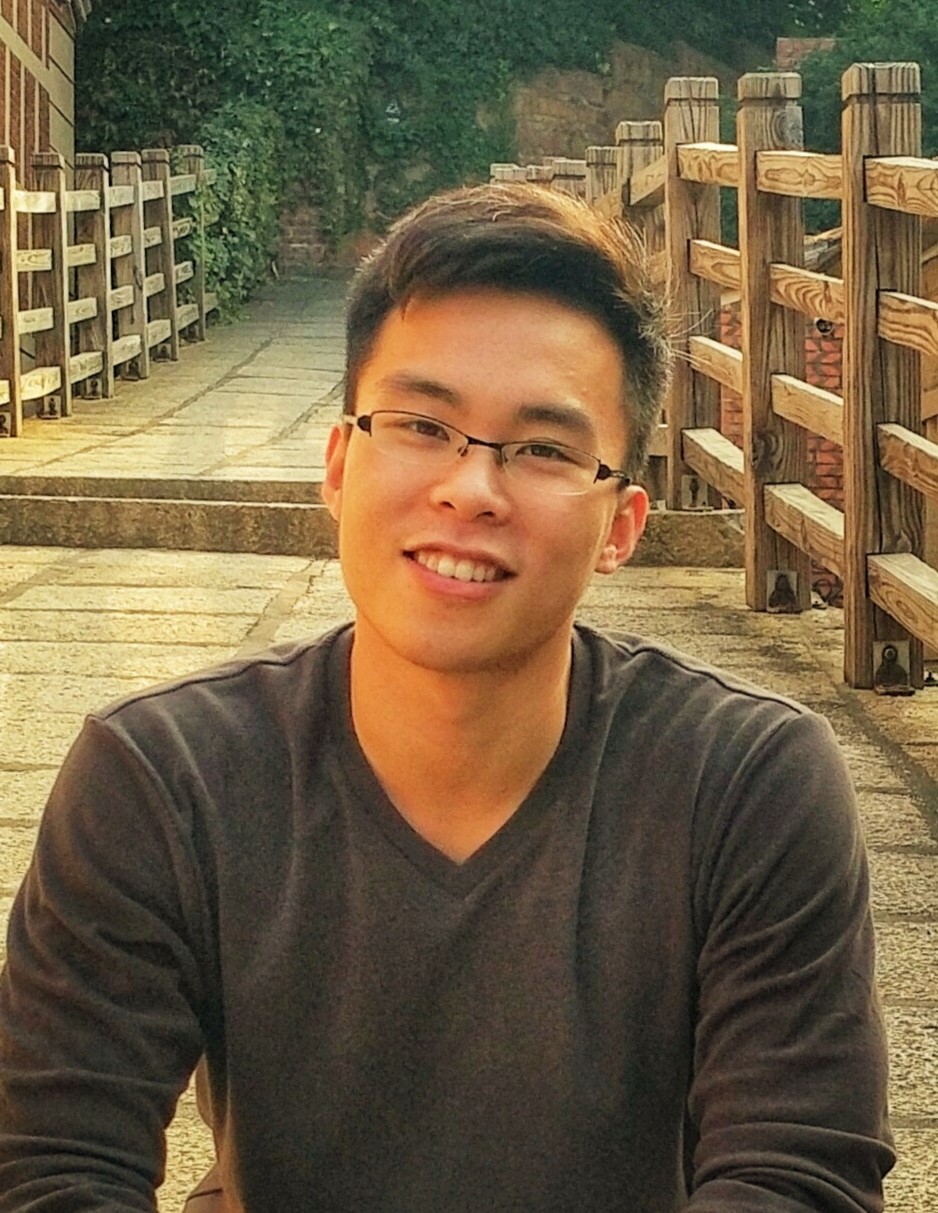
About
I am a Ph.D. student in Electrical and Computer Engineering at the University of British Columbia, advised by Dr. Xiaoxiao Li in the Trusted and Efficient AI (TEA) Lab. My research focuses on multimodal learning, vision–language reasoning, and generative models, with applications in computational pathology and medical imaging. I expect to graduate in December 2027.
Previously, I was a research intern at RIKEN and Shanghai AI Laboratory, a research assistant at Sun Yat-Sen University, and an algorithm engineer at Peng Cheng Laboratory. I received my M.S. in Pattern Recognition and Intelligent Systems from South China University of Technology.
Research Focus
- Evidence-grounded visual reasoning: benchmarks and reusable evidence representations for reasoning over ultra-resolution images and whole-slide pathology images.
- Multimodal computational pathology: combining heterogeneous foundation models, biological knowledge, and image features for mutation prediction and survival analysis.
- Controllable medical image generation: diffusion models for interactive tumor editing and identity-preserving brain aging modeling.
Research & Industry Experience
University of British Columbia — Trusted and Efficient AI Lab
Ph.D. Researcher · Vancouver, Canada · September 2023–Present
Advisor: Dr. Xiaoxiao Li
- UltraVR: Evidence-Grounded Visual Reasoning
- Developed a benchmark of 490 questions across four ultra-resolution image domains, with structured annotations of intermediate visual facts and reasoning operations.
- Evaluated 11 vision–language models and diagnosed grounding and local-perception bottlenecks, with downstream inference often recovering when intermediate visual facts were supplied.
- SlideBank: Whole-Slide Visual Reasoning
- Designed concept-indexed evidence banks with spatial provenance, multi-scale retrieval, and persistent reuse across questions about whole-slide images.
- Improved Patho-R1 WSI-VQA accuracy from 44.28% to 52.77% compared with thumbnail-only inference.
- LogitProd: Pathology Foundation-Model Fusion
- Developed logit-level fusion for nine heterogeneous pathology foundation models without encoder retraining or feature alignment.
- Achieved the best performance on 20 of 22 tasks spanning classification, mutation prediction, and survival analysis.
- Weakly Supervised HCC Survival Modeling
- Built a whole-slide-image survival risk pipeline using 324 resected hepatocellular carcinoma cases and integrated morphologic and molecular profiling.
- Validated risk stratification in an independent cohort of 363 TCGA cases and characterized distinct prognostic signatures and a fibronodular subtype.
RIKEN Center for Advanced Intelligence Project
Research Intern · Tokyo, Japan · May–November 2024
Supervisor: Prof. Tatsuya Harada
- Interactive CT/MRI Tumor Editing
- Developed sketch-conditioned latent diffusion with reference-image conditioning for interactive tumor editing across four public CT/MRI datasets.
- Designed sketch refinement to repair imperfect user contours, combining structural guidance and reference-image features to control tumors while preserving surrounding anatomy.
Shanghai AI Laboratory — Medical Image AI Group
Research Intern · Shanghai, China · December 2023–April 2024
Supervisor: Prof. Shaoting Zhang
- Identity-Preserving Brain MRI Editing
- Developed age- and identity-conditioned latent diffusion with longitudinal triplet supervision using cohorts of 1,639 adult and 1,272 infant MRI scans.
- Combined source-image context, continuous age conditioning, and learned identity control to preserve individual anatomy during age transformations from a single scan.
Sun Yat-Sen University — HCP Lab
Research Assistant · Guangzhou, China · June 2022–November 2023
Advisor: Prof. Xiaodan Liang
- Multimodal Genetic Mutation Prediction
- Designed knowledge graphs and graph-transformer label embeddings that integrate biological and linguistic gene priors.
- Evaluated the method across nine TCGA and two CPTAC cancer types; published in Pattern Recognition (2026).
Peng Cheng Laboratory — Institute of Visual Intelligence
Algorithm Engineer · Shenzhen, China · July 2021–May 2022
- Developed and trained a multimodal Transformer for histopathology image analysis on large-scale datasets.
South China University of Technology — Brain–Computer Interface Center
Graduate Researcher · Guangzhou, China · January 2018–June 2021
Advisors: Profs. Zhuliang Yu and Wei Wu
- EEG/MEG Source Imaging: Developed a data-synthesis-based spatiotemporal encoder–decoder and evaluated it on simulated and real EEG/MEG signals, resulting in a first-author IEEE Transactions on Neural Networks and Learning Systems publication.
- Multimodal Brain Signals: Built a Bayesian generative model for EEG–fMRI learning by combining neural networks and probabilistic graphical models.
Xiamen Airlines
Aircraft Electronic and Software Systems Engineer · August 2016–November 2017
Publications
Knowledge-Guided Multi-Modality Transformer for Multi-Label Genetic Mutation Prediction
Gexin Huang, Chenfei Wu, Mingjie Li, Xiaojun Chang, Ying Sun, Lei Xing, Xiaodan Liang, Liang Lin, Guang Yang, and Shen Zhao.
Pattern Recognition, 2026.Electromagnetic Source Imaging via a Data-Synthesis-Based Convolutional Encoder–Decoder Network
Gexin Huang, Ke Liu, Jiawen Liang, Chang Cai, Zheng Hui Gu, Feifei Qi, Yuanqing Li, Zhu Liang Yu, and Wei Wu.
IEEE Transactions on Neural Networks and Learning Systems, 2024.
Preprints & Manuscripts
UltraVR: A Diagnostic Ultra-Resolution Image-VQA Benchmark for Evidence-Grounded Reasoning
Gexin Huang, Yanting Yang, Myeongkyun Kang, Beidi Zhao, Jun Zhou, Chen Zhou, Gang Wang, Zu-hua Gao, and Xiaoxiao Li.
2026 · Submitted to ICLR.SlideBank: A Persistent Hierarchical Evidence Bank for Consistent Whole-Slide Reasoning
Beidi Zhao*, Gexin Huang*, Ciro Zhang*, Anqi Li, Yusheng Tan, Chen Zhou, Gang Wang, Zu-hua Gao, and Xiaoxiao Li.
2026 · Submitted to WACV. *Equal contribution.Plug-and-Play Logit Fusion for Heterogeneous Pathology Foundation Models
Gexin Huang, Anqi Li, Yusheng Tan, Beidi Zhao, Gang Wang, Zu-hua Gao, and Xiaoxiao Li.
2026 · Submitted to WACV.Artificial Intelligence-Driven Risk Stratification Reveals Distinct Prognostic Signatures and a Fibronodular Subtype of Hepatocellular Carcinoma
Gexin Huang, Ali Bashashati, Katherine Rich, Xiaoxiao Li, and Zu-hua Gao.
2025 · Submitted to European Journal of Cancer.Interactive Tumor Progression Modeling via Sketch-Based Image Editing
Gexin Huang, Ruinan Jin, Yucheng Tang, Can Zhao, Tatsuya Harada, Xiaoxiao Li, and Gu Lin.
2025 · Preprint.See-in-Pairs: Reference Image-Guided Comparative Vision-Language Models for Medical Diagnosis
Ruinan Jin, Gexin Huang, Xinwei Shen, Qiong Zhang, Yan Shuo Tan, and Xiaoxiao Li.
2025 · Submitted to Medical Image Analysis.Identity Preserving Latent Diffusion for Brain Aging Modeling
Gexin Huang, Zhangsihao Yang, Yalin Wang, Guido Gerig, Mengwei Ren, and Xiaoxiao Li.
2025 · Submitted to Medical Image Analysis.
Education
- University of British Columbia, Vancouver, Canada
Ph.D. in Electrical and Computer Engineering · September 2023–December 2027 (expected). - South China University of Technology, Guangzhou, China
M.S. in Pattern Recognition and Intelligent Systems · January 2018–June 2021. - Civil Aviation University of China, Tianjin, China
B.S. in Automation · September 2012–June 2016.
Honors & Awards
- President’s Academic Excellence PhD Initial Award (2023).
- Excellence Prize of National Intelligent Car Race (2015).
- National College Students’ Innovation Program — Excellence Project Completion (2014).
- Excellent Undergraduate Student (2015).
- First Prize Scholarships (2012–2013, 2020); Second Prize Scholarships (2014–2015, 2019).
Academic Service
- Reviewer: Pattern Recognition, Medical Image Analysis, IEEE Transactions on Medical Imaging, and MICCAI (2025); CVPR (2023–2025); IEEE Transactions on Neural Networks and Learning Systems (2022–2023).
- Teaching Assistant: Advanced Techniques in Machine Learning; Digital Signal Processing (2019).
